Automation Guide
How AI Agents Are Transforming Business Automation in 2026
QuantumAI
2 May 2026
10 min read
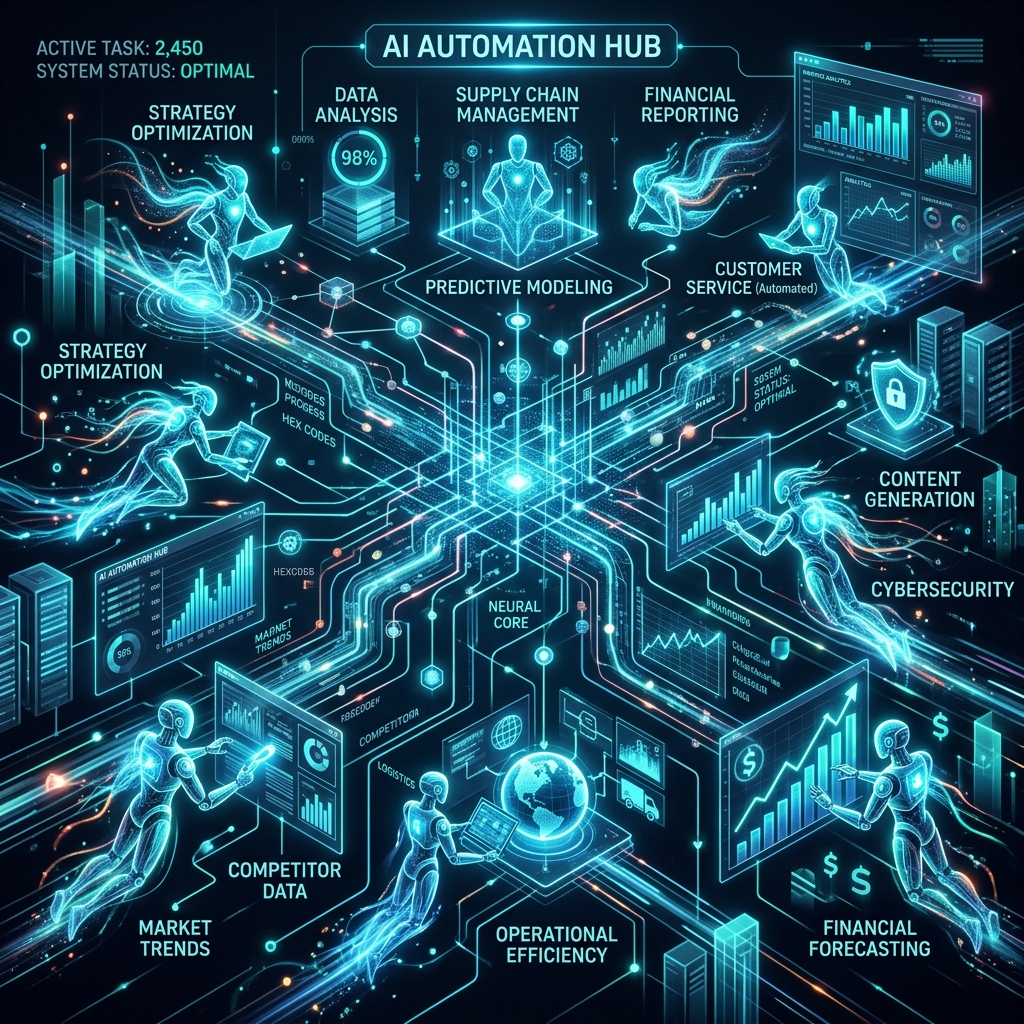
Article at a Glance
- AI Agents differ from standard chatbots by possessing autonomy, memory, and the ability to interact with external APIs to complete complex tasks.
- Integrating Large Language Models (LLMs) with RAG allows agents to process proprietary business data securely.
- Modern businesses are seeing up to a 60% reduction in operational costs by deploying agents for customer support, sales qualification, and data processing.
- A successful implementation requires identifying bottlenecks, starting with human-in-the-loop testing, and scaling gradually.
AI Optimized Insights
Understanding the Shift: What Exactly Are AI Agents?
For years, "automation" in business meant rigid, rule-based software. If X happens, do Y. While this traditional Robotic Process Automation (RPA) was effective for highly predictable tasks, it fell apart the moment an exception occurred.
Enter the era of the AI Agent.
Unlike standard chatbots—which simply answer questions based on pre-trained knowledge—AI Agents are sophisticated, autonomous systems designed to perceive their environment, make decisions, and execute multi-step actions to achieve specific goals. They don't just tell you how to do something; they do it for you.
When equipped with the right tools, an AI agent can read an incoming email, look up the customer in your CRM, identify that they are requesting a refund, verify the refund policy against your internal documents, process the refund via your payment gateway, and draft a personalised apology email—all without human intervention.
How Do AI Agents Actually Work?
The underlying technology that powers these agents represents a massive leap forward in artificial intelligence. Here are the core components that make an AI agent functional:
1. The "Brain" (Large Language Models)
At the core of every modern AI agent is a Large Language Model (LLM) like GPT-4, Claude 3, or Llama 3. The LLM processes natural language, understands context, and performs the necessary reasoning to decide the next logical step in a workflow.
2. Retrieval-Augmented Generation (RAG)
To make an AI agent useful for your specific business, it needs to know your company's data. RAG allows the agent to securely query your internal databases, PDFs, policy documents, and website in real-time, ensuring its actions and responses are accurate and grounded in your proprietary knowledge.
3. Tool Use and API Integrations
This is where the magic happens. Agents are given access to external "tools" via APIs. Whether it's reading from a Google Sheet, creating a ticket in Jira, sending a message in Slack, or updating Salesforce, the agent can autonomously trigger these tools based on the reasoning it performs.
Deep Dive: Real-World Business Applications
The transition from theory to practice is already happening. Here is how forward-thinking businesses are deploying AI agents today:
Customer Service Excellence
Traditional chatbots frustrated users with endless "Press 1 for Support" loops. Modern AI support agents can handle 80% of routine inquiries from start to finish. They can dynamically check inventory levels, process returns, or escalate highly sensitive issues to a human representative with a full summary of the interaction. Companies adopting these systems are reporting up to a 35% reduction in support costs alongside significantly higher customer satisfaction scores.
Sales & Lead Qualification
Sales teams spend hours researching prospects and drafting outreach. Autonomous sales agents can scan a lead's LinkedIn profile, company website, and recent news, then draft a highly personalised email sequence. They can also handle initial back-and-forth scheduling, ensuring your human sales team only steps in when a prospect is warm and ready to close.
Data Processing and Operations
From invoice processing to end-of-month reporting, agents excel at handling unstructured data. An agent can extract line items from a scanned vendor invoice, match them against a purchase order, flag discrepancies, and input the approved data directly into accounting software like Xero or QuickBooks with 99.9% accuracy.
Your Step-by-Step Implementation Guide
Successfully deploying AI agents requires strategy. We recommend the following framework for SMEs looking to adopt this technology:
- Identify the Bottlenecks: Don't automate everything at once. Look for high-volume, repetitive tasks that drain your team's energy and where the ROI of automation is immediately clear.
- Select the Right Architecture: Depending on the complexity, you might use no-code agent builders like Zapier Central, or you might require a custom-built solution using LangChain or AutoGPT. (If you need help deciding, check out our Custom Development Services).
- Implement "Human-in-the-Loop": Never deploy an agent completely unsupervised on day one. Set it up so the agent drafts the action, but a human must click "Approve" before it executes.
- Deploy and Scale: Once the agent proves its reliability and accuracy, gradually remove the human approval steps and let it run autonomously, scaling it to handle larger volumes of work.
Frequently Asked Questions (FAQ)
What is the difference between RPA and AI Agents? Robotic Process Automation (RPA) requires strict, unvarying rules and structured data. If a website changes its layout, an RPA bot will break. AI Agents use natural language processing and reasoning, allowing them to adapt to changes, handle unstructured data (like messy emails), and make nuanced decisions.
Are AI agents secure with sensitive business data? Yes, provided they are implemented correctly. Enterprise-grade LLMs and secure RAG architectures ensure that your proprietary data is not used to train public models. Furthermore, agents can be restricted via strict API permissions so they only have access to the data they absolutely need.
Do I need to know how to code to use AI agents? Not necessarily. While complex, multi-agent systems require professional developers, there are increasingly powerful low-code platforms entering the market. However, for deep integration into legacy systems, partnering with an automation expert is recommended.
How much does it cost to implement an AI Agent for a small business? Costs vary wildly based on complexity. Simple automations can be built for a few hundred pounds, while custom, multi-agent systems integrated across an enterprise can cost tens of thousands. The key metric to focus on is ROI—most successful implementations pay for themselves within the first 3 to 6 months through time saved and increased throughput.
The Future is Autonomous
AI agents represent a fundamental shift in how businesses operate. We are moving from software as a tool to software as an employee. Organisations that adopt this technology early will gain significant competitive advantages in productivity, cost efficiency, and scalability.
If you're ready to explore how AI agents can transform your specific workflows, contact our automation experts today for a free consultation.
Read More Articles
Web Design
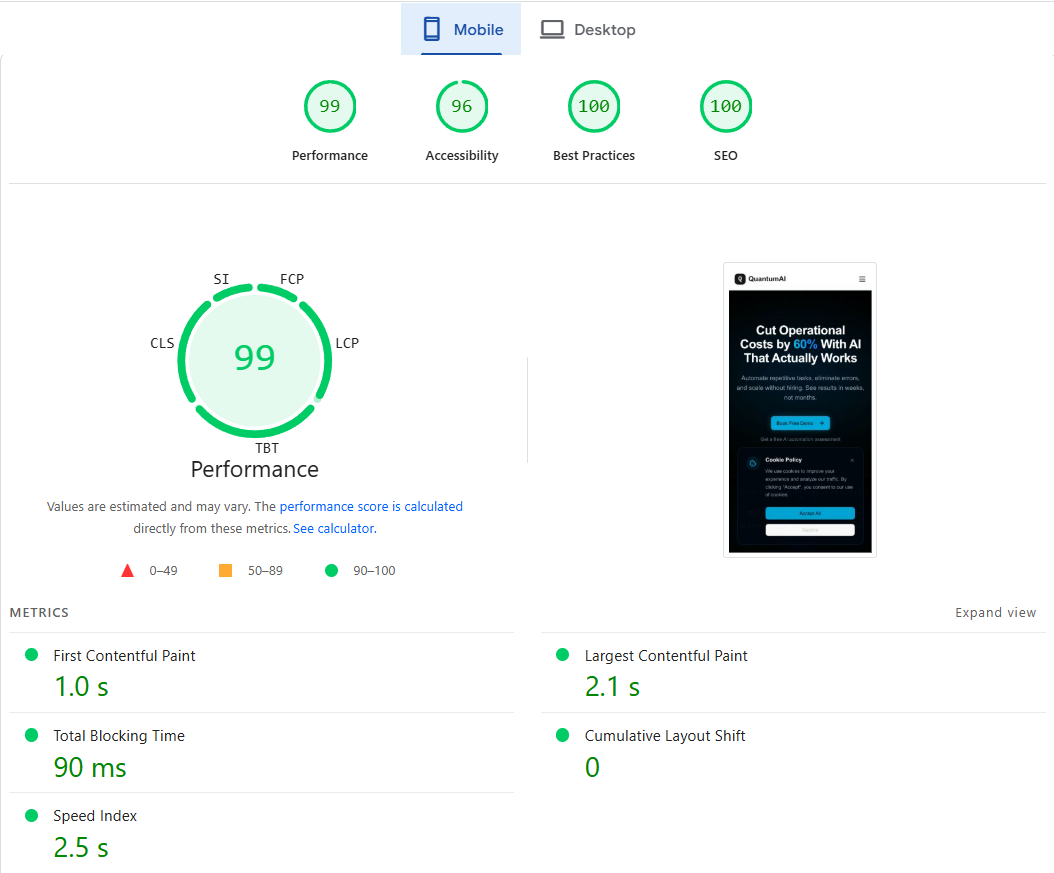
Is Your Slow Website Costing You Customers? How Website Speed Directly Affects UK Business Revenue
A comprehensive, data-driven analysis of how website latency, Google Core Web Vitals, and bloated platform architecture cost UK businesses thousands in lost revenue every month.
5 min read

Web Development
How AI Is Accelerating Web Development in 2026
AI is revolutionising web development through speed and efficiency. Learn why professional web design and SEO/AEO optimisation remain essential for business growth.
6 min read
Web Design
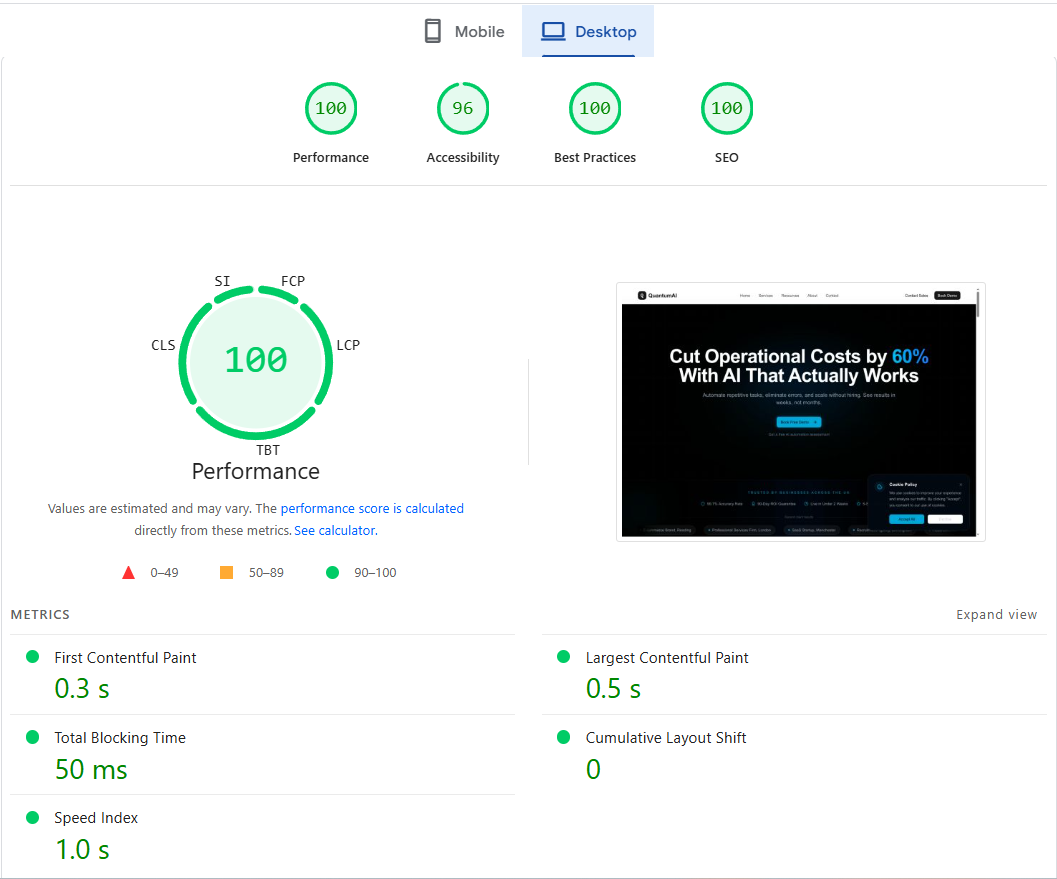
Wix vs Custom Website UK: Which is Better for Your Business?
Are you a UK business owner wondering if Wix is enough, or if you need a custom-built website? Here's a technical breakdown of performance, SEO, and long-term costs.
5 min read
Ready to Transform Your Business?
Let our automation experts create a custom solution tailored to your business needs.
Book Your Free DemoGet More Insights
Subscribe to get the latest automation guides and case studies delivered to your inbox.